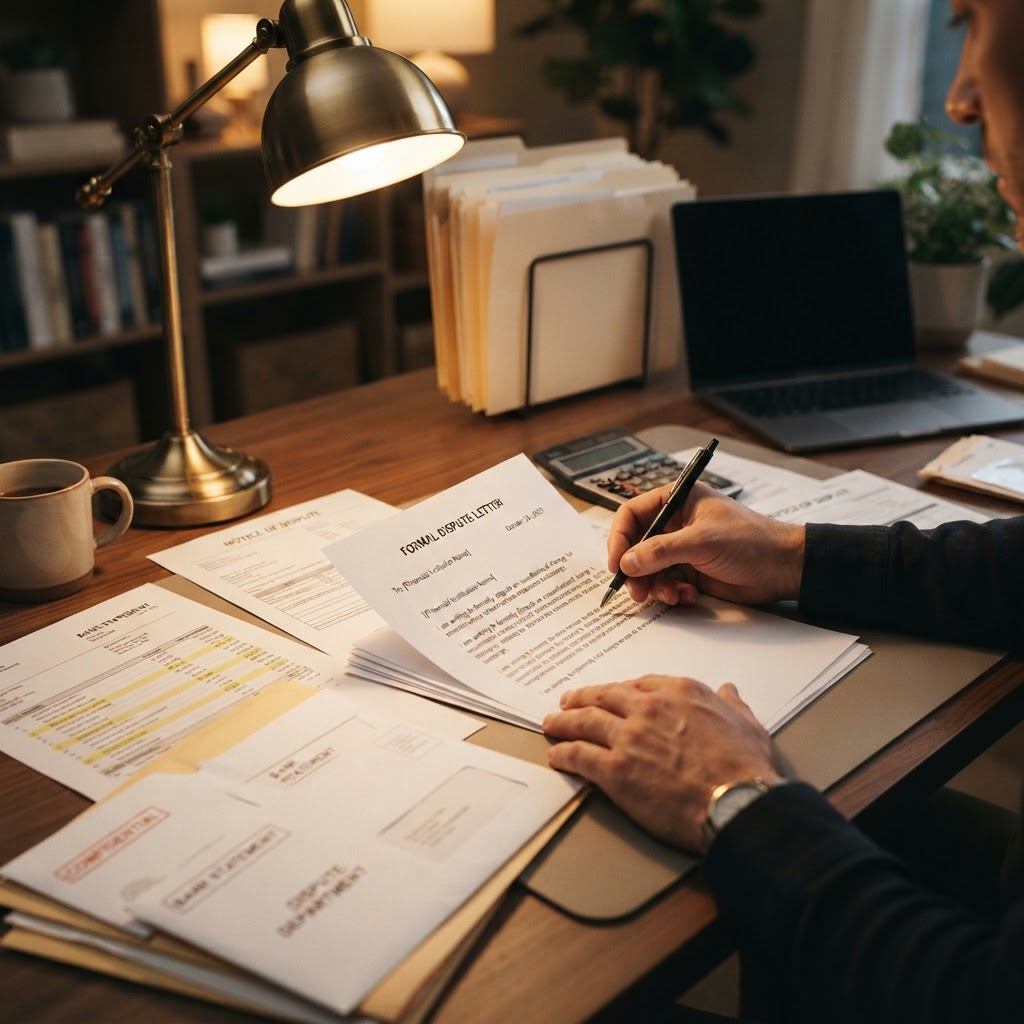
How to Dispute Errors on Your Credit Report
One in five credit reports contains an error. Here's the step-by-step process to fix them.
Studies by the Federal Trade Commission found that approximately one in five credit reports contains an error significant enough to affect the person's credit score. If you've found an error on yours, you have the right under the Fair Credit Reporting Act (FCRA) to dispute it. Here's the step-by-step process.
Step 1: Get All Three Reports
Before disputing, obtain copies of your credit report from all three bureaus, Equifax, Experian, and TransUnion. The same error may appear on one, two, or all three reports. You need to dispute with each bureau that shows the error.
Get your free reports at AnnualCreditReport.com.
Step 2: Identify and Document the Errors
Review each report carefully and document every error you find. Common errors include:
- Accounts you didn't open (possible identity theft)
- Late payments that were actually paid on time
- Incorrect account balances or credit limits
- Accounts listed twice (duplicates)
- Accounts that should have been removed after 7 years
- Personal information errors (wrong name, address, or employer)
For each error, gather supporting documentation: bank statements, payment confirmations, account statements, or any evidence that proves the information is wrong.
Step 3: Write Your Dispute Letter
Your dispute letter should be clear, specific, and factual. Include:
- Your full name, address, and date of birth
- Your Social Security number (for identification purposes)
- The specific item you're disputing (account name, account number, and the error)
- Why the information is incorrect
- What you want the bureau to do (correct or remove the information)
- Copies of supporting documents (never send originals)
Send the letter by certified mail with return receipt so you have proof of delivery and the date it was received.
Step 4: Dispute with the Furnisher Too
In addition to disputing with the credit bureau, send a separate dispute letter to the creditor or collection agency that furnished the inaccurate information. This gives you two paths to resolution and strengthens your case.
Step 5: Wait for the Investigation
Under the FCRA, the credit bureau must investigate your dispute within 30 days (45 days if you disputed after receiving your free annual report). During the investigation:
- The bureau forwards your dispute to the furnisher
- The furnisher reviews the information and reports back
- The bureau makes a determination based on the results
Step 6: Review the Results
After the investigation, the bureau must:
- Send you written results within 5 business days of completing the investigation
- Provide a free copy of your updated report if the dispute resulted in a change
- Notify the other two bureaus if the information was corrected or removed
Step 7: If the Dispute Is Resolved in Your Favor
The incorrect information will be corrected or removed from your report. Check all three reports to make sure the correction has been applied across all bureaus.
Step 8: If the Dispute Is Not Resolved
If the bureau verifies the information as accurate (meaning the furnisher confirmed it), you still have options:
Add a consumer statement. You can add a 100-word statement to your report explaining your side of the dispute. Lenders will see this when reviewing your credit.
Dispute again with new evidence. If you have additional documentation that wasn't included in your first dispute, you can file a new one.
File a CFPB complaint. The Consumer Financial Protection Bureau accepts complaints about credit reporting and can help facilitate resolution.
Consult an FCRA attorney. If the error is causing you financial harm and the bureau refuses to correct it, you may have grounds for an FCRA lawsuit.
Keep Good Records
Throughout the process, keep copies of everything: your dispute letters, certified mail receipts, bureau responses, and all correspondence. These records are essential if you need to escalate or take legal action.